
Exploring the World
Hello travelers,
It’s been about three months since I started building Relics of Noven Garde, and the world is finally starting to take shape. Today I want to share a look at how exploration works right now, the biomes you can wander through, and the hub town that ties it all together.
Over the past three months, the world of Noven Garde has gone from a blank grid to a living, explorable space. Every world is built from a random seed, so no two are the same. The generation uses biome frontiers — so instead of a patchwork of tiny regions, you’ll see large, connected areas that feel like real places as you travel.
The world is divided into chunks (for optimization and sanity), and each chunk is 20×20 tiles. Right now, my tiles are pretty basic — grass, stones, and a few other placeholders — but they’re enough to explore. The remote server generates these chunks and streams them to the client as you move.
Biomes & Atmosphere
So far, the game has five playable biomes and the starting hub town:
- Crystalline Glacier – Ice and snow with slippery terrain and freezing effects.
- Rust Swamp – Toxic bogs dotted with corroded tech relics.
- Ember Dunes – Scorched sands with fiery geysers and blackened rock.
- Void Mire – A late-game nightmare of shadows and warped physics.
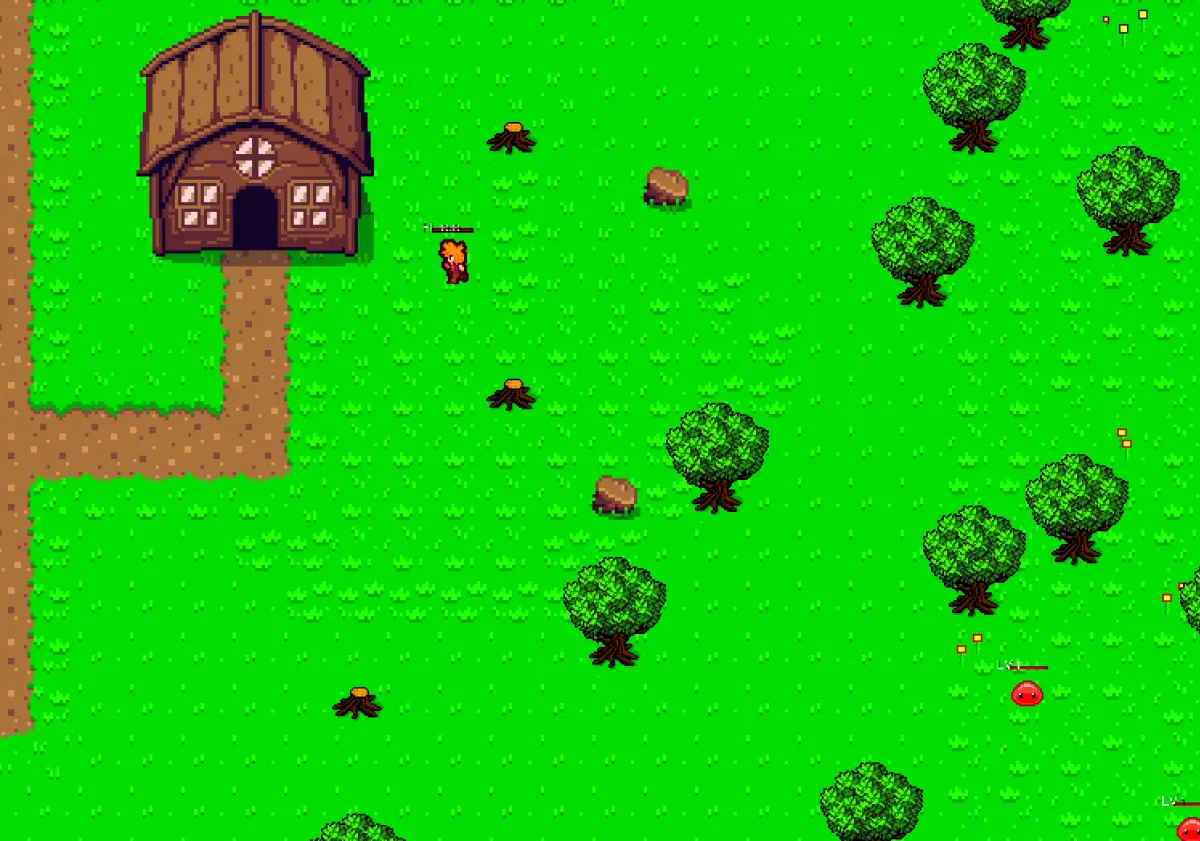
- Friendly Forest – Calm green woodlands perfect for early exploration.
- [Hub Town Name TBD] – The main spawn point with NPC buildings.

I’ve got two more in the works — Caves and Dungeons. These will be procedurally generated mazes hidden in other biomes, with treasure at the end if you can make it through.
Making the World Feel Alive
Right now, my “overlay tiles” are simple, but the plan is for them to make the world feel layered and immersive — animated campfires, giant arches, and other environmental details. These aren’t just decorative; they help break up the flatness of a tile grid.
Each biome also has its own background music. For now, I’m using free tracks from OpenGameArt — nothing custom yet — but they instantly change the mood when you cross into a new area. The Crystalline Glacier has a light chime-and-xylophone melody that feels cold and airy, while the Ember Dunes pulses with a tense, driving rhythm that makes the place feel hotter and more hostile. Even in placeholder form, it makes exploration feel a lot more alive.
The Hub Town
The hub town is the safe heart of the world. Eventually, it’ll have:
- Blacksmith – Crafting & upgrading weapons and armor.
- Alchemist – Brewing potions and scrolls.
- Jeweler – Gem upgrades and socketing.
- Tavern – (More on this in a later post!)
- Vault – A bank for storing extra loot.
- Necromancer’s House – The respawn point after death.
Right now, only one building is enterable — a simple house with a bed and chairs — but it’s got a smooth transition effect when you walk in.
Where It Could Go
The exact order of what comes next isn’t set in stone — I keep a running Notion board of ideas, features, and experiments I want to work on. Some of them might happen next week, some might sit there for months, and some might get scrapped entirely.
If you’re curious (or just like peeking at a messy to-do list), the board is public viewable in the roadmap. And if you’re a registered member, you can leave a comment right on this post — I’d love to hear what you think should be a priority, or ideas you’d like to see explored.
Until next time,
— Novendahl
Developer of Relics of Noven Garde